In this briefing
The essentials in one minute
Market at a glance
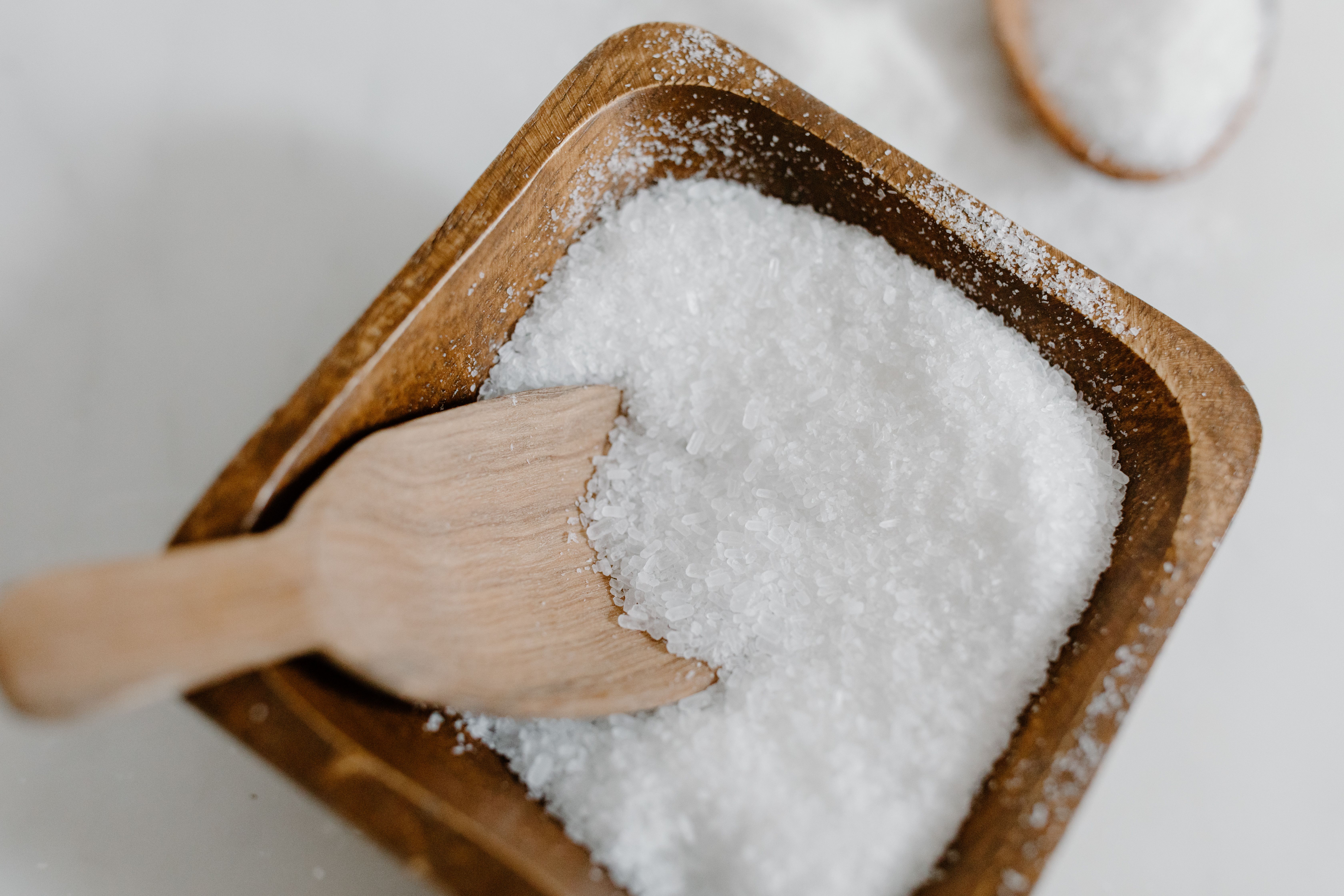
Edible salt is extracted crystalline salt intended for human consumption or food processing. Portugal’s edible salt market includes cooking salt, specialty sea salt and salt used by food manufacturers. Mainland sea salt output offers a view of domestic supply, while Portugal’s reformulation programme tracks how much salt selected foods contain.
134.2 thousand tonnes
All mainland sea salt production in Portugal, 20232
−14.8%
Change in weighted mean salt content across three Nielsen-tracked food groups in mainland Portugal’s supermarkets and hypermarkets, 2018–20234
0.86 g per 100 g
Mean salt content of 115 sampled in-house breads in Portugal, 20214
1.4 g per 100 g
Maximum salt content of finished bread covered by Portugal’s 2009 law5
What counts as edible salt in Portugal?
Portugal’s 2007 edible salt decree defines it as extracted crystalline salt, sold untreated or treated, with at least 90% sodium chloride by dry weight. It covers salt for direct consumption, food manufacturing and further processing for food use.1
How much sea salt does Portugal produce?
Statistics Portugal reported 134.2 thousand tonnes of mainland sea salt production in 2023, up from 117.7 thousand tonnes in 2022. The maritime authority says most domestic sea salt is destined for food use, but the published production total covers all end uses and does not measure edible salt sales in Portugal.23
2022 117.7 thousand tonnes • 2023 134.2 thousand tonnes
Statistics Portugal (INE)2
How do edible salt suppliers in Portugal distinguish their products?
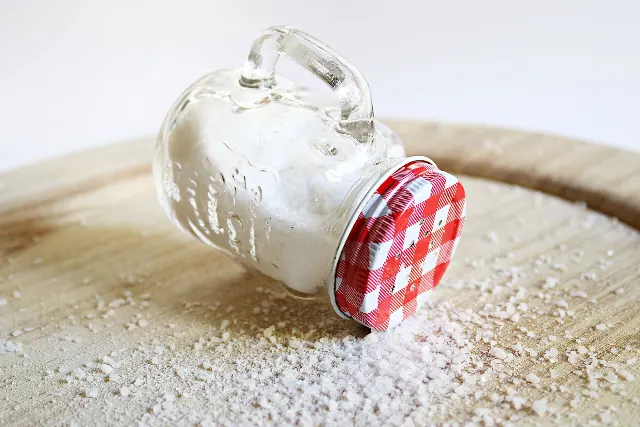
Edible salt suppliers in Portugal differentiate their products through formats such as coarse sea salt and flor de sal, which Portaria n.º 72/2008 defines as crystals collected by hand from the surface of brine in traditional salt pans. Necton lists traditional coarse sea salt and flor de sal, while Salmarim lists a four-pepper flor de sal and describes harvesting in Castro Marim.678
How does bread regulation affect edible salt use in Portugal?
Where is edible salt use changing in Portugal’s food industry?
Portugal’s Directorate-General of Health reported that weighted mean salt content fell 14.8% from 2018 to 2023 across three food groups Nielsen tracked in mainland Portugal’s supermarkets and hypermarkets: crisps and other savoury snacks, breakfast cereals and pizzas. The result measures salt content in selected foods where manufacturers use edible salt as an ingredient.4
How can producers market the origin of edible salt in Portugal?
Portugal’s Portaria n.º 72/2008 allows sellers of untreated edible salt for direct human consumption to use geographic origin or specific production claims under the conditions in Annex III. These claims offer a way to distinguish products by place or method alongside the legal sales names for untreated salt and flor de sal.6
Frequently asked questions about edible salt in Portugal
How big is the edible salt market in Portugal?
Statistics Portugal reports 134.2 thousand tonnes of mainland sea salt output in 2023. That production figure includes all end uses and does not establish the size of the edible salt market.23
Does edible salt in Portugal include rock salt?
Yes, Portugal’s 2007 edible salt decree recognises salt from rock salt deposits as well as salt obtained from evaporating seawater or rock salt solutions.1
What is the legal salt limit for bread in Portugal?
Portugal caps salt at 1.4 g per 100 g of finished bread under its 2009 law. Recognised traditional breads with protected names are exempt from this cap.5
What is flor de sal in Portugal?
Under Portugal’s 2008 rules, flor de sal is untreated edible salt collected by hand from the floating crystal layer in traditional salt pans.6
Sources and approach
This briefing uses only public publications. Statistics and announcements are dated; company offers are identified as such. Sources accessed on November 14, 2026.
- 01Diário da RepúblicaDecreto-Lei n.º 350/200719 October 2007, articles 1–3, printed p. 7684
- 02Statistics Portugal (INE)INEWS 60: Estatísticas da Pesca 2023August 2024, p. 81, Aquicultura e salicultura
- 03Directorate-General for Natural Resources, Safety and Maritime ServicesSaliculturaUndated overview, paragraphs on solar evaporation and end uses
- 04Directorate-General of Health (DGS)Redução do teor de sal e açúcar nos alimentos em PortugalJuly 2025, monitoring method p. 9, Results p. 10 and Table 4 p. 14
- 05Diário da RepúblicaLei n.º 75/200912 August 2009, article 3, printed p. 5225
- 06Diário da RepúblicaPortaria n.º 72/200823 January 2008, points 4–5 and Annex III, printed pp. 689–690 and 692
- 07NectonProdutos: sal marinhoProduct catalogue, traditional coarse sea salt and flor de sal listings
- 08SalmarimSalt ProductsProduct catalogue, Castro Marim and Flor de Sal 4 Peppers
Something to correct? Contact Businesscoot and specify the passage and its source.