Italian market
The hydrogen vehicle market in Italy
The hydrogen vehicle market represents a market segment of the automotive industry dedicated to hydrogen-powered passenger cars, vans and trucks. Hydrogen-powered cars operate in two main ways, depending on the technology adopted:[Newsauto]
- Price
- €99 excl. VAT
- €104.45 incl. French VAT
- PDF sent by email within 48 hours
- Written by industry experts
- Data unavailable to general-purpose AI
- Press sources
Intelligent search
Sectoria
Explore the Businesscoot corpus to take your study further.



The Businesscoot team
A question or a quote?Market overview
Identify industry dynamics, opportunities and market participants to inform your project.
- Understand the market scope
- Identify demand drivers
- Understand market participants and their challenges
The hydrogen vehicle market represents a market segment of the automotive industry dedicated to hydrogen-powered passenger cars, vans and trucks. Hydrogen-powered cars operate in two main ways, depending on the technology adopted:[Newsauto]
HICEV (Hydrogen Internal Combustion Engine Vehicle): This type of car uses hydrogen as fuel in a conventional internal combustion engine. The hydrogen is burned in the engine, generating energy to power the vehicle. This technology was the first to be adopted by car manufacturers to use hydrogen in vehicles.
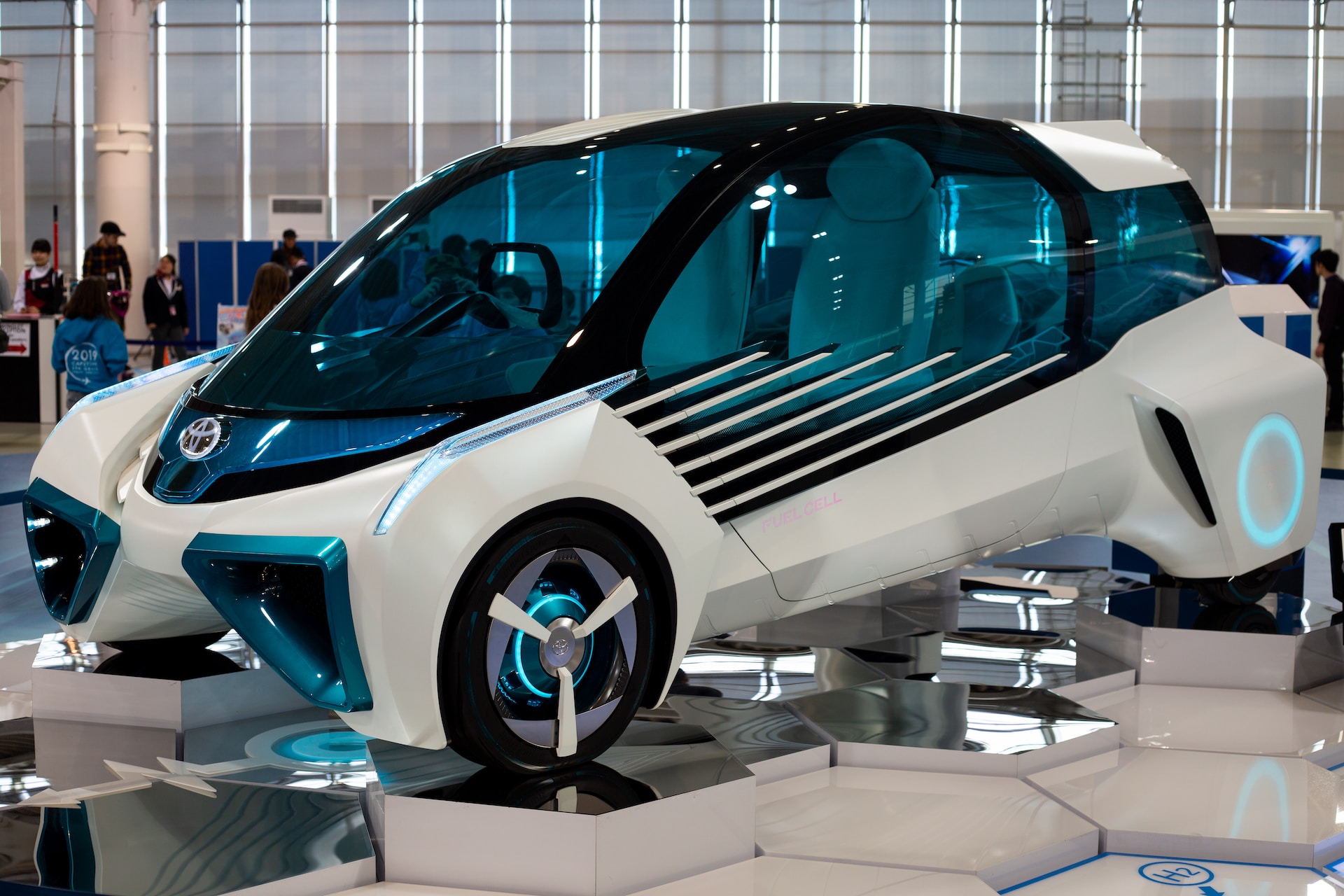
FCEV (Fuel Cell Electric Vehicle): FCEV cars, on the other hand, are electric vehicles powered by a hydrogen fuel cell. In these cars, hydrogen reacts with oxygen in a fuel cell to produce electricity, which is then used to power an electric motor. This type of vehicle offers a longer range than conventional electric vehicles, with ranges of up to 800-1000 km per single charge. An example of such a vehicle is the Toyota Mirai, which recently set a range record by traveling more than 1,000 km on a single hydrogen charge.
The history of hydrogen vehicles has much older origins than one might think. Although fuel cell cars have only become a hot topic in recent years, the idea of using hydrogen as a fuel for vehicles dates back several centuries. Francois Isaac de Rivaz, a Swiss inventor, designed the first prototype vehicle powered by hydrogen and oxygen in 1807. Later, in 1860, a three-wheeled vehicle powered by a two-stroke hydrogen engine was made. The first hydrogen-powered truck was produced in 1933 by the Norwegian electric company Norsk Hydro.
A particularly important juncture in the history of hydrogen vehicles occurred in the 1960s, with the introduction of General Motors' Electrovan, the first passenger fuel cell car. Finally, the first "real" fuel cell car put on sale was the Hyundai Tucson FCEV in 2013. Since then, the hydrogen vehicle market has continued to grow, with more and more manufacturers venturing into this area.[Insideeves]
The size of the global hydrogen fuel cell vehicle market was estimated at $0.92 billion in 2021, and is expected to reach $43.2 billion by 2031, growing at a CAGR of 45.5 percent from 2022 to 2031.[Alliedmarketresearch]
Our expertise
Sources to support your analysis
Base your analysis on identified sources, with clear dates and definitions for each figure.
- Understand the scope of the data
- Find the cited publications
- Compare perspectives on the market
Produced by experts — Analysis backed by 35 years of experience in professional information. Our experts select sources, cross-check data and explain the issues shaping your market.
Beyond AI — Professional sources and expert analysis that go beyond ChatGPT or Claude answers based solely on the public web.
IndexPresse press database — Professional press articles covering market news, business strategies and industry developments. All articles are .
Open-access databases — Freely accessible data and publications to enrich the analysis and cross-check the information available on each market.
Official statistics databases — Economic and demographic indicators published by statistical agencies to measure trends and compare markets.
Specialist industry databases — Specialist data and reports to deepen your understanding of the players, segments and dynamics of each industry.



















Trusted by professionals
Professionals share their experience of the clarity and usefulness of our studies and the Businesscoot service.
- Clear, structured analysis
- Insights for business projects
- Responsive customer service
As a business valuation expert, I need reliable strategic analysis of potential targets in their industries. For several years, I have relied on Businesscoot's industry analysis, where expertise and relevant data are essential.

David Jeanne
Managing director •
I am very satisfied with Businesscoot's market studies. The information is clear and well structured, making it easy to understand an industry's trends and key figures. Their catalogue is extensive and varied, and customer service is responsive. I recommend Businesscoot for reliable, accessible analysis.

Time Albouy
Business development expert •
Our team of industry experts
Talk to our team to check that the study's subject and scope match your project.
- Check the market scope
- Choose the right study for your project
- Ask a question before ordering
Guilhem Cournut
Food, retail and consumer goods
Denis Monnoyeur
Industry, energy and construction
Marie-Annick Cournède
Health, beauty and personal services

Arthur Lefeuvre
Digital, media and telecommunications
Related studies
Explore complementary studies to broaden your analysis.
- Explore related markets
- Compare market dynamics
- Refine your project
The electric bicycle market in Italy
According to the Highway Code, electric bicycle or pedal-assisted bicycle is defined as"Velocipede equipped with an auxiliary electric motor with a maximum continuous rated power of 0.25 kilowatts whose power supply is gradually reduced and finally cut off when the vehicle reaches a speed of
The electric car market in Italy
The electric car market is the automotive sector that includes vehicles powered by electric motors and rechargeable batteries. These vehicles provide an environmentally friendly alternative to traditional internal combustion vehicles.
The market of minicars in Italy
Minicars or microcars, technically defined by the Highway Code as light or heavy quadricycles, are four-wheeled vehicles with specific dimensions and characteristics, intended primarily for urban traffic and limited to an equal or maximum speed of 45 km/h, for the L6e category, or 80 km/h,