Italian market
The renewable energy market in Italy
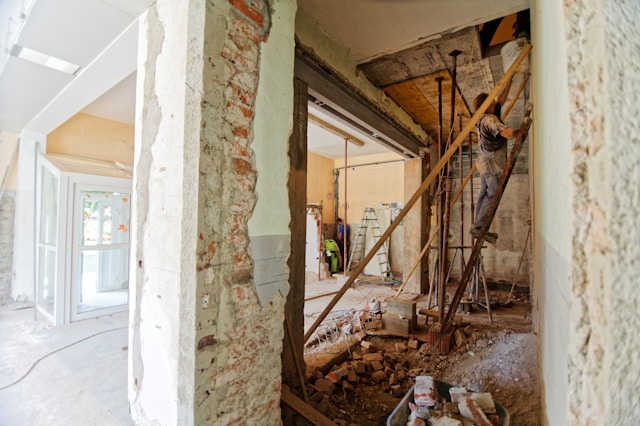
The energy renovation market includes all activities, technologies and services aimed at improving the energy efficiency of buildings, both residential and nonresidential. This includes work on the building envelope (thermal coats, high-efficiency windows and doors), air conditioning and heating systems (heat pumps, condensing boilers), ventilation and air exchange systems, energy-efficient lighting, photovoltaic systems, and smart energy management solutions. The sector is closely linked to European and national goals on emissions reduction, ecological transition and housing sustainability, and is divided between public actors, construction companies, designers, technology providers and energy certification services.
- Price
- €99 excl. VAT
- Written by industry experts
- Data unavailable to general-purpose AI
- Press sources
Intelligent search
Sectoria
Explore the Businesscoot corpus to take your study further.



The Businesscoot team
A question about this study?Market overview
Identify industry dynamics, opportunities and market participants to inform your project.
- Understand the market scope
- Identify demand drivers
- Understand market participants and their challenges
The energy renovation market includes all activities, technologies and services aimed at improving the energy efficiency of buildings, both residential and nonresidential. This includes work on the building envelope (thermal coats, high-efficiency windows and doors), air conditioning and heating systems (heat pumps, condensing boilers), ventilation and air exchange systems, energy-efficient lighting, photovoltaic systems, and smart energy management solutions. The sector is closely linked to European and national goals on emissions reduction, ecological transition and housing sustainability, and is divided between public actors, construction companies, designers, technology providers and energy certification services.
At the European level, the market for energy efficiency in buildings is valued at more than 90 billion euros in 2023, with growth expected to exceed 150 billion in 2030. In Italy, the estimated value of the market exceeded 36 billion euros in 2022, thanks mainly to the boost of the 110% Superbonus, other tax incentives (Ecobonus, Bonus Casa, Conto Termico) and the progressive awareness of citizens. Between 2020 and 2022, there has been a +82% increase in energy upgrades, with an average expenditure per building of more than 550,000 euros in condominiums and about 115,000 euros in detached houses.
The structure of the Italian market involves many players: construction companies, installers, manufacturers of insulation materials and plant technologies, ESCo (Energy Service Companies), certifying technicians and designers. There are more than 48,000 companies active in construction sectors related to energy renovation, and hundreds of thousands of workersinvolvedin design, installation, management and verification activities. The supply chain has become progressively professionalized, partly in response to the complex procedures for accessing incentives and the growing demand for technical and digital skills.
Average prices for the most common interventions are, according to ENEA and industry sources, around:
Thermal insulation: 120-180 €/m² (depending on material and building type);
Window replacement: 500-900 € per window;
Air-to-water heat pump: 7,000-12,000 € installed;
Photovoltaic system with storage: 14,000-20,000 € for 6 kW + battery;
Controlled mechanical ventilation: 3,000-6,000 € for a 100 m² apartment.
The sector was strongly influenced by regulations and incentives, particularly the 110% Superbonus, which generated a boom between 2021 and 2022 but also showed critical issues related to fraud, blockages in credit transfer, and shortage of materials and qualified personnel. After the reshaping of the Superbonus and the transition to 90%, 70%, and lower schemes, the market is showing signs of readjustment, while maintaining high demand for leading and trailing interventions, especially in residential construction.
Challenges in the sector include simplification of procedures,access to credit, enhancement of the skilled workforce, and the need for an integrated approach between design, energy diagnosis, post-intervention monitoring, and smart energy management. There is growing interest in smart systems (home automation, building automation), LCA assessment of materials, and the role of energy certifiers in ensuring transparency and measurability of results.
From a regulatory point of view, the market moves within a multifaceted framework that includes: the EU Directive 2018/844 (EPBD), the PNRR (which allocates significant funds to building renovation), the Minimum Requirements Decree, and the implementation decrees for building bonuses. Regions also have competence in the management of energy registers, accreditation of certifiers, and control of APEs (Energy Performance Certificates).
Our expertise
Sources to support your analysis
Base your analysis on identified sources, with clear dates and definitions for each figure.
- Understand the scope of the data
- Find the cited publications
- Compare perspectives on the market
Produced by experts — Analysis backed by 35 years of experience in professional information. Our experts select sources, cross-check data and explain the issues shaping your market.
Beyond AI — Professional sources and expert analysis that go beyond ChatGPT or Claude answers based solely on the public web.
IndexPresse press database — Professional press articles covering market news, business strategies and industry developments. All articles are .
Open-access databases — Freely accessible data and publications to enrich the analysis and cross-check the information available on each market.
Official statistics databases — Economic and demographic indicators published by statistical agencies to measure trends and compare markets.
Specialist industry databases — Specialist data and reports to deepen your understanding of the players, segments and dynamics of each industry.














Trusted by professionals
Professionals share their experience of the clarity and usefulness of our studies and the Businesscoot service.
- Clear, structured analysis
- Insights for business projects
- Responsive customer service
As a business valuation expert, I need reliable strategic analysis of potential targets in their industries. For several years, I have relied on Businesscoot's industry analysis, where expertise and relevant data are essential.

David Jeanne
Managing director •
I am very satisfied with Businesscoot's market studies. The information is clear and well structured, making it easy to understand an industry's trends and key figures. Their catalogue is extensive and varied, and customer service is responsive. I recommend Businesscoot for reliable, accessible analysis.

Time Albouy
Business development expert •
Our team of industry experts
Talk to our team to check that the study's subject and scope match your project.
- Check the market scope
- Choose the right study for your project
- Ask a question before ordering
Guilhem Cournut
Food, retail and consumer goods
Denis Monnoyeur
Industry, energy and construction
Marie-Annick Cournède
Health, beauty and personal services

Arthur Lefeuvre
Digital, media and telecommunications
Related studies
Explore complementary studies to broaden your analysis.
- Explore related markets
- Compare market dynamics
- Refine your project
The hydropower energy market in Italy
The hydropower market concerns the production of electricity generated through the use of water. This type of energy is one of the pillars of renewable energy worldwide, playing a key role in the energy transition to a low-carbon future.
The wood energy market in France
The qualification of wood energy arises when wood is used for energy purposes, to produce heat, electricity or second-generation biofuels. Wood energy can be used as primary fuel but it can also be transformed industrially into by-products (solid, liquid or gaseous) that are also combustible.
The energy renovation market in France
Energy-efficient renovation of French homes and commercial buildings is of paramount importance, responding to a triple imperative: combating the effects of climate change, supporting citizens' purchasing power and improving the population's quality of life.