Brazilian market
The fertilizer market in Brazil
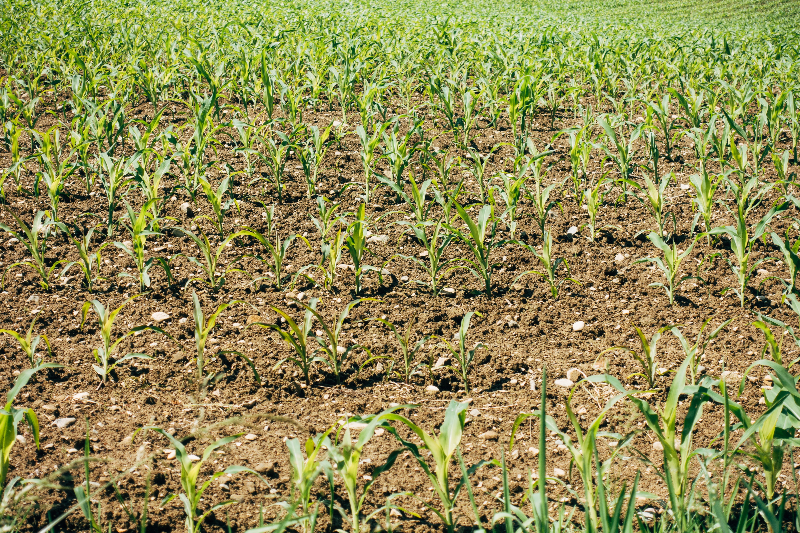
Like many other life forms, plants need nutritional elements to ensure healthy growth and development, mainly potassium, nitrogen, oxygen and phosphorus. Fertilizers therefore consist of nitrogen, potassium and phosphorus, as oxygen is naturally present in the air. These are called chemical fertilizers, unlike natural or organic fertilizers (produced from plant or animal material). The use of fertilizers therefore refers to a fertilizing action of the soil. The aim is to increase agricultural yields to meet a global demand for food that is increasing year after year. The fertilizer market is thereby a constantly growing market.
- Price
- €99 excl. VAT
- Written by industry experts
- Data unavailable to general-purpose AI
- Press sources
Intelligent search
Sectoria
Explore the Businesscoot corpus to take your study further.



The Businesscoot team
A question about this study?Market overview
Identify industry dynamics, opportunities and market participants to inform your project.
- Understand the market scope
- Identify demand drivers
- Understand market participants and their challenges
Like many other life forms, plants need nutritional elements to ensure healthy growth and development, mainly potassium, nitrogen, oxygen and phosphorus. Fertilizers therefore consist of nitrogen, potassium and phosphorus, as oxygen is naturally present in the air. These are called chemical fertilizers, unlike natural or organic fertilizers (produced from plant or animal material). The use of fertilizers therefore refers to a fertilizing action of the soil. The aim is to increase agricultural yields to meet a global demand for food that is increasing year after year. The fertilizer market is thereby a constantly growing market.
Fertilizer application rates have slightly decreased over the last five years, as technological advances have allowed farmers to become more efficient in their distribution, reducing waste and requiring less fertilizer. Revenue from the sector has been falling at a compound annual rate of 4.1% per year for the past five years. These losses are largely correlated with fluctuations in fertilizer prices.
Brazil imports, on average, around 25 million tons of fertilizers per year, with nitrogen fertilizers accounting for around 35% of the total, phosphate fertilizers 23% and potassium fertilizers 42%. Brazil is one of the largest agricultural producers and exporters in the world, even though 80% of the domestic fertilizer market is served through imports. Nevertheless, in the last decade, there have been indications of new ventures in the nitrogen fertilizer sector, but the difficulties, associated with availability, price, international competition, as well as the volume of investments required, have delayed the advances of national entrepreneurs.
Study contents
Chapters connecting customer needs, advisory services and the economics of industry professionals.
- Understand customers and uses
- Connect products, businesses and distribution channels
- Compare market participants and their models
Market overview
Demand Analysis
Market structure
Analysis of the offer
Regulation
Positioning of the players
Our expertise
Sources to support your analysis
Base your analysis on identified sources, with clear dates and definitions for each figure.
- Understand the scope of the data
- Find the cited publications
- Compare perspectives on the market
Produced by experts — Analysis backed by 35 years of experience in professional information. Our experts select sources, cross-check data and explain the issues shaping your market.
Beyond AI — Professional sources and expert analysis that go beyond ChatGPT or Claude answers based solely on the public web.
IndexPresse press database — Professional press articles covering market news, business strategies and industry developments. All articles are .
Open-access databases — Freely accessible data and publications to enrich the analysis and cross-check the information available on each market.
Official statistics databases — Economic and demographic indicators published by statistical agencies to measure trends and compare markets.
Specialist industry databases — Specialist data and reports to deepen your understanding of the players, segments and dynamics of each industry.

















Trusted by professionals
Professionals share their experience of the clarity and usefulness of our studies and the Businesscoot service.
- Clear, structured analysis
- Insights for business projects
- Responsive customer service
As a business valuation expert, I need reliable strategic analysis of potential targets in their industries. For several years, I have relied on Businesscoot's industry analysis, where expertise and relevant data are essential.

David Jeanne
Managing director •
I am very satisfied with Businesscoot's market studies. The information is clear and well structured, making it easy to understand an industry's trends and key figures. Their catalogue is extensive and varied, and customer service is responsive. I recommend Businesscoot for reliable, accessible analysis.

Time Albouy
Business development expert •
Our team of industry experts
Talk to our team to check that the study's subject and scope match your project.
- Check the market scope
- Choose the right study for your project
- Ask a question before ordering
Guilhem Cournut
Food, retail and consumer goods
Denis Monnoyeur
Industry, energy and construction
Marie-Annick Cournède
Health, beauty and personal services

Arthur Lefeuvre
Digital, media and telecommunications
Related studies
Explore complementary studies to broaden your analysis.
- Explore related markets
- Compare market dynamics
- Refine your project
The fertilizer market in France
Modern agriculture relies on the use of fertilizers, which are essential to obtain acceptable yields and thus to pay farmers properly. Fertilizers fall into two categories: natural (or organic) fertilizers, which result from the decomposition of plant or animal matter, and chemical (or mineral) fertilizers,
The fertilizer market in Italy
Like all living things, plants have certain nutritional needs that must be met to ensure their proper development. Four distinct needs have been scientifically identified: potassium(K), nitrogen(N), oxygen(O) and phosphorus(P). Although oxygen is naturally present in the air, it is often necessary to ensure the
The coffee market in Brazil
Coffee consumption originated in the 15th century in Yemen, spreading to the Arab-Ottoman cultural area and quickly to Europe. The second most traded commodity in the world after oil, coffee is also the most consumed beverage in the world after water. Global consumption was estimated